HoopsAI: Your AI-Powered Basketball Form Coach
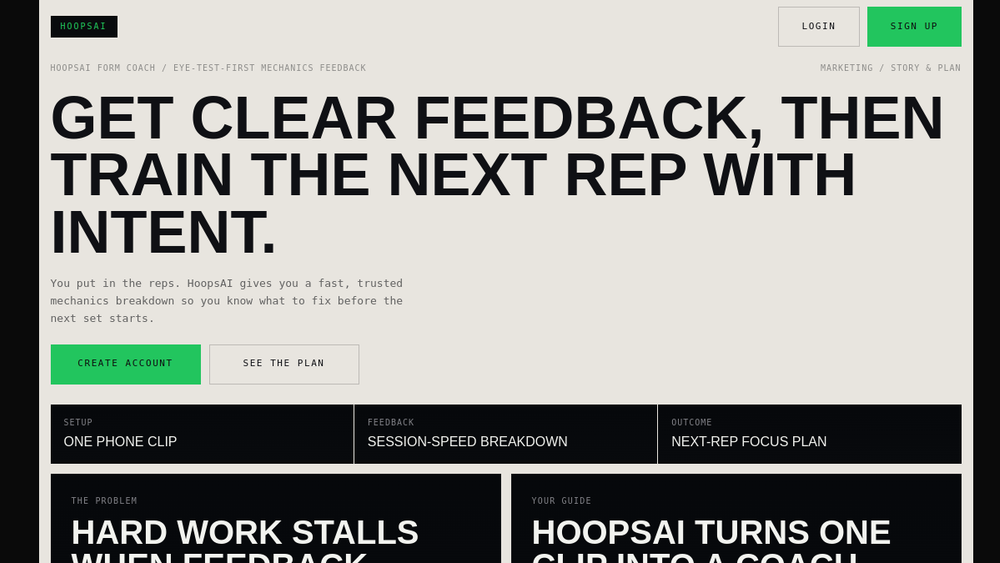
HoopsAI is an innovative AI tool designed to provide instant, trustworthy feedback on basketball shooting mechanics. It addresses a core problem in player development: the lag between performing a repetition and understanding how to improve the next one. By leveraging computer vision and AI analysis, it transforms a simple phone video into a detailed, session-speed breakdown.
Core Concept
The platform operates on a simple "Eye-test-first" principle. The goal is to deliver feedback so clear and immediate that a player can apply the correction to their very next repetition, turning practice into progressive training rather than just repetition.
Key Features & Workflow
The service follows a streamlined three-step process:
- Upload One Rep: Players can upload a short video clip of a single shot taken on their phone. The system requires no special sensors, calibration, or complex setup, eliminating friction during a workout.
- Read The Signal: HoopsAI analyzes the video and presents a dominant metric along with supporting data, confidence scores, and context that aligns with what the user sees in the video. This is designed to pass a coach's "eye test" for trustworthiness.
- Train The Next Rep: The analysis concludes with a specific adjustment plan for the immediate next shot. It also builds a player profile that can be tracked over time across multiple sessions to show trends in mechanics.
Target Audience & Use Cases
HoopsAI is built for two primary user groups:
- Solo Players: Athletes working on their game independently can get reliable feedback without a coach present, making solo practice sessions more efficient and effective.
- Serious Coaches & Programs: The tool is robust enough to handle high-volume analysis for coaches running team practices or training sessions, allowing them to provide data-driven feedback to multiple players quickly.
Unique Selling Points
The main advantages of HoopsAI are its speed and practicality. Unlike tools that provide overnight reports, it is engineered for live training environments. The emphasis on "trust-first metrics" aims to ensure the AI's feedback is actionable and credible, bridging the gap between raw data and practical on-court application.