
Introduction
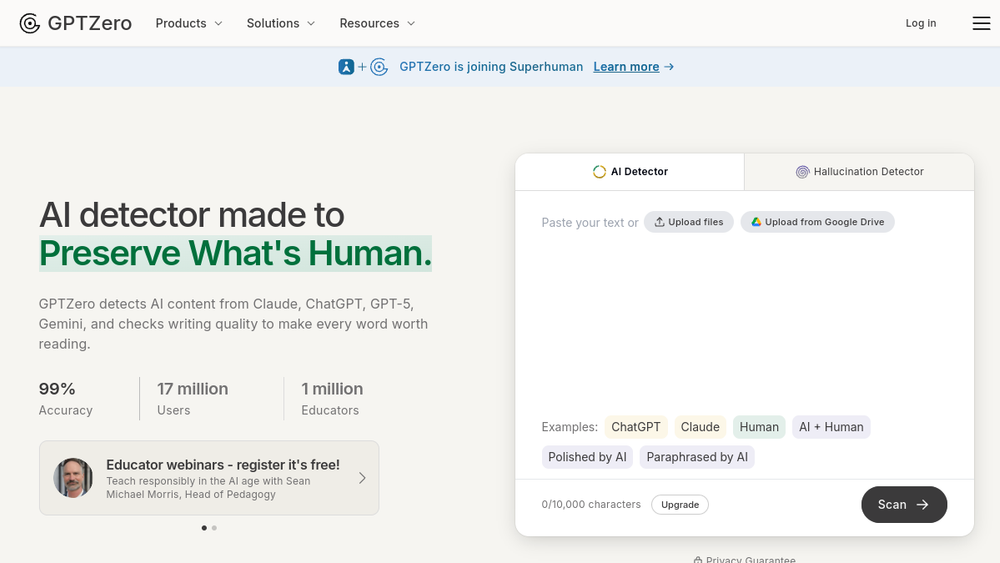
Detect GPT is a specialized tool designed to identify text generated by artificial intelligence models. Its primary function is to analyze written content and determine the likelihood that it was produced by large language models (LLMs) such as ChatGPT, GPT-5, Gemini, Claude, and others. This is crucial for maintaining authenticity and originality in various fields.
Key Features
- Multi-Model Detection: Capable of identifying content from a wide range of leading AI models, including but not limited to OpenAI's ChatGPT/GPT series, Google's Gemini, and Anthropic's Claude.
- Accuracy and Reliability: The tool emphasizes high accuracy rates in distinguishing between human-written and AI-generated text, often cited as 99% in its marketing.
- Sentence-Level Analysis: Provides granular results, often highlighting specific sentences or phrases within a document that are flagged as potentially AI-generated.
- Integrated Platforms: Offers integrations and browser extensions (e.g., for Chrome, Google Docs) to streamline the detection process within existing workflows.
- Support for Multiple Languages: While optimized for English, it may support other languages like German, Portuguese, French, and Spanish.
Primary Use Cases
- Education: Teachers and institutions use it to check student submissions for academic integrity and ensure work is original.
- Publishing and Content Creation: Editors and writers verify the authenticity of articles, papers, and other content before publication.
- Recruitment and HR: Employers can scan application materials to ensure they reflect a candidate's genuine writing ability.
- General Verification: Individuals can check documents, emails, or reports to confirm they are human-authored.
The tool addresses the growing need to differentiate between human creativity and machine-generated output in the age of advanced AI.